Midwest-based, naturalist informed
Interactive art experiences for your local green spaces


The Fungi Hunt Project is a one-of-a-kind blend of art, science, and outdoor exploration.
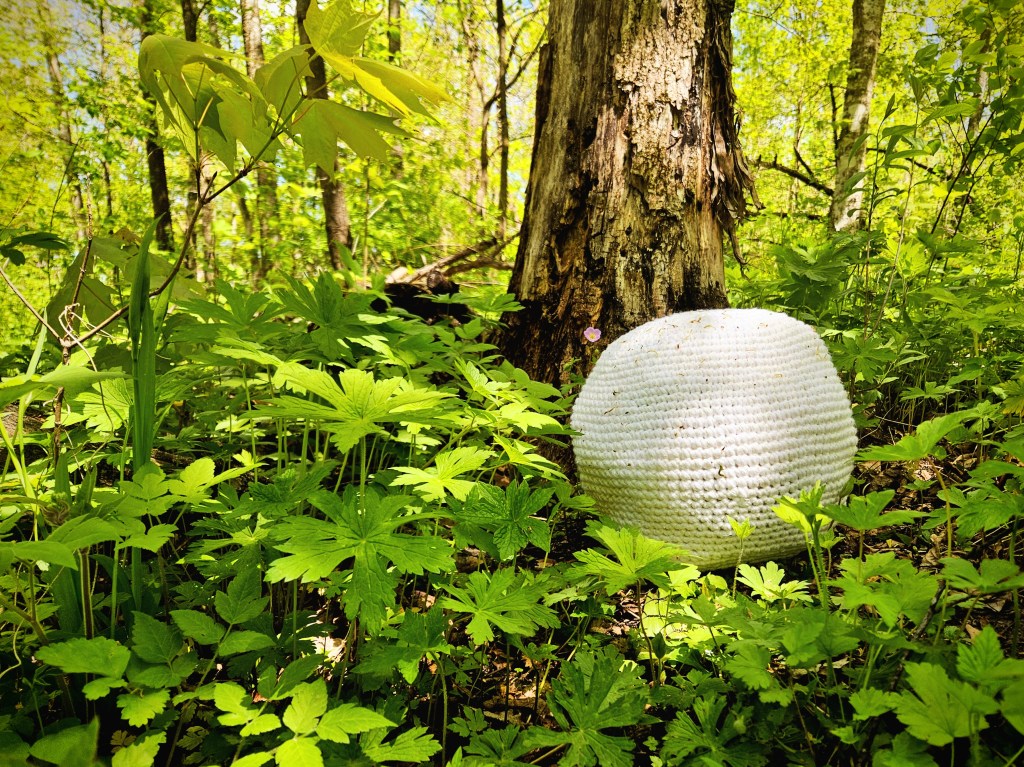
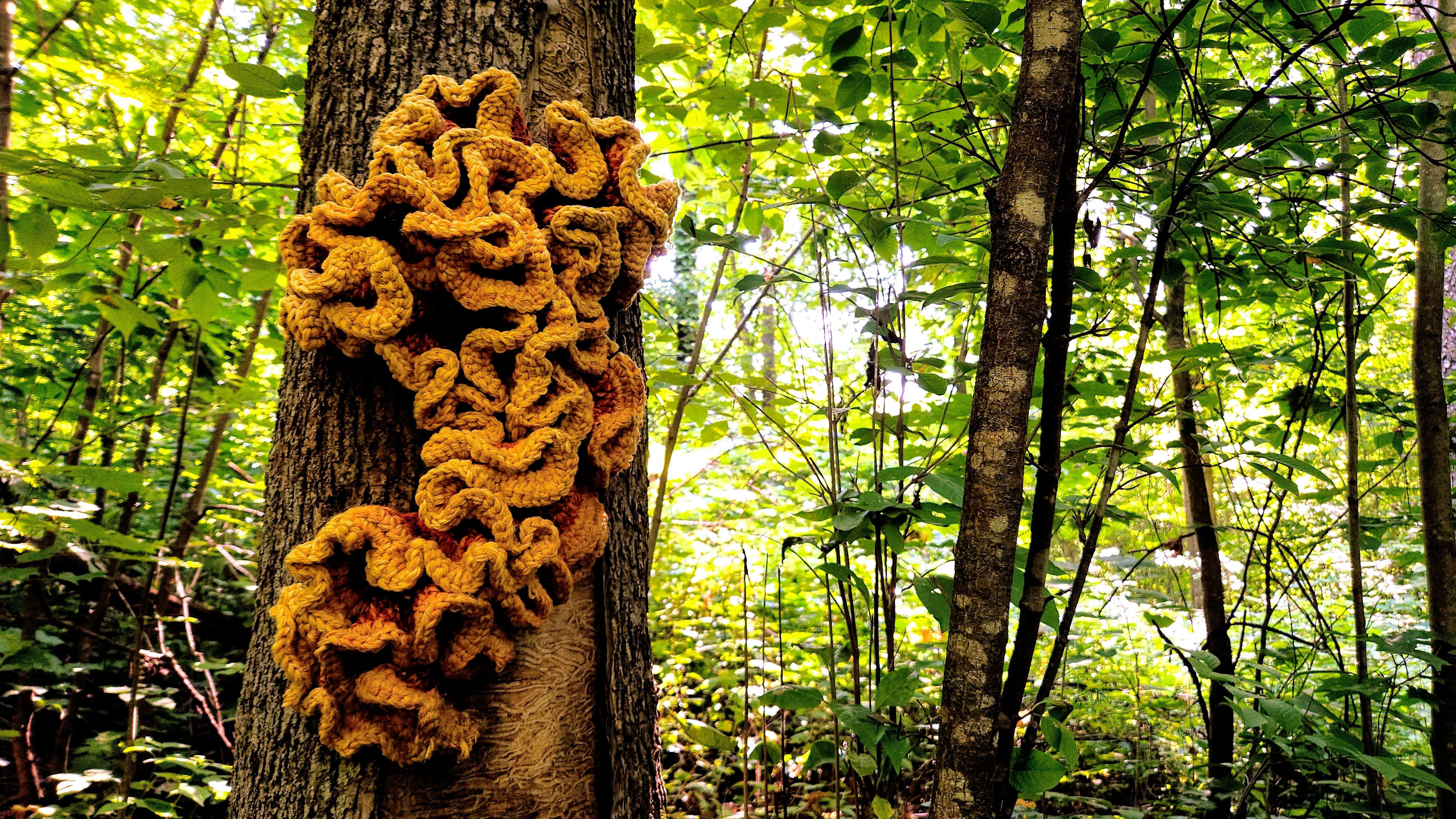
Created in 2024 by fiber artist Lydia Hansen, this immersive public art project transforms walking trails into scavenger hunts and a classroom for environmental education. These public art installations (suitable for trail systems, parks, and nature centers) showcase lifelike crochet models of fungi placed on dead wood along trails and walking paths, inviting visitors to learn more about the places and spaces they occupy.
Each Fungi Hunt is an invitation to slow down, look closely, and connect with the natural world. Visitors can also participate in environmental education programs, workshops, and naturalist-led hiking opportunities to learn more about fungi and other art and nature topics.
FAQs
Where can I find a Fungi Hunt?
Visit Find a Hunt to see current and former Fungi Hunts. Don’t see one close to you? Contact your local park system or another environmental organization to suggest a future collaboration. The Fungi Hunt can travel to any trail network in the Midwest – or beyond!
How long does the artwork last?
Artwork will remain in good condition for 8-10 months, depending on weather conditions. Exposure to the elements naturally causes fading and discoloration such as algae growth. Like real fungi, this discoloration is normal and contributes to the lifelike appearance of the art.
What mushrooms can I find on a Fungi Hunt?
Expect to find mushrooms common to the area you are walking through. I work with host sites and experience naturalists to determine the final fungi lineup for each Fungi Hunt. All species will be native to or commonly found in the area. You might see real mushrooms popping up alongside the crochet ones!
What is the artwork made of?
I use synthetic (acrylic) fibers to crochet fungi. All my fibers are sourced secondhand and tested in advance to ensure they will not leech dye into the environment. Certain fungi use materials such as Styrofoam, exterior grade wire, or spray foam insulation to provide shape and structure.
Why don’t you use natural fibers?
Natural fibers like wool and cotton tend to attract nibbling critters who use them for nesting – causing significant damage to the artwork and scattering yarn fibers across the forest floor. Wildlife know acrylic fibers are not good for nesting, so leave them largely untouched. This helps the art last longer outside and reduces the overall environmental footprint.
What about Leave No Trace?
The principles of Leave No Trace are incorporated throughout these temporary art installations. All artwork is placed on dead wood to prevent harm to living trees. All artwork is placed near trails to deter off-trail activity. I cooperate with host sites to prominently display trail rules on project signage. Fibers and other materials are selected for their longevity and durability so the artwork can be removed intact at the end of the project. I do a clean sweep at the end of each Fungi Hunt, removing all artwork, signs, stakes and hardware, down to the last screw or staple.
How do you keep the fungi in place?
I use a combination of staples and screws to secure tree-mounted artwork to stumps and logs. For ground-mounted fungi, I use a combination of zip ties, chicken wire, and short metal stakes to secure artwork.
Whose permission is needed to host a Fungi Hunt?
I require permission from the landowner or property manager of the site hosting the Fungi Hunt. If you’d like your local nature center or park to host a Fungi Hunt, get in touch with them first! I’ll need to work with them directly to make sure the Fungi Hunt abides by all park/trail rules
Have a question not answered above?
Email me at hello@lydiahansen.art
Meet the artist


Press
Host a hunt!
Are you a naturalist or educator for a nature center? Manager for a regional trail system, park, or conservation area? Part of a “Friends of” group for a State Park? You could host a Fungi Hunt!